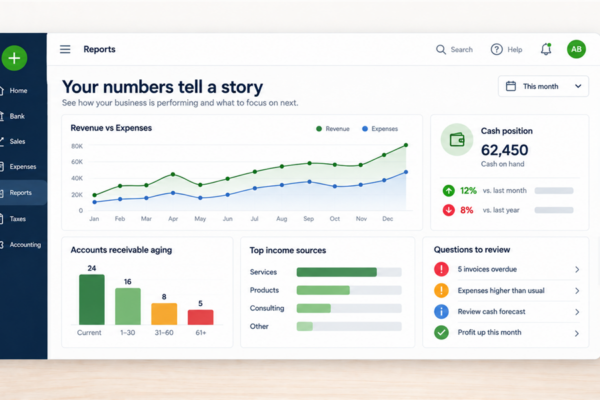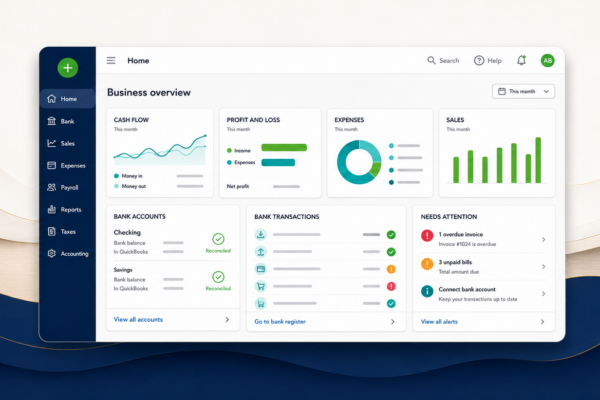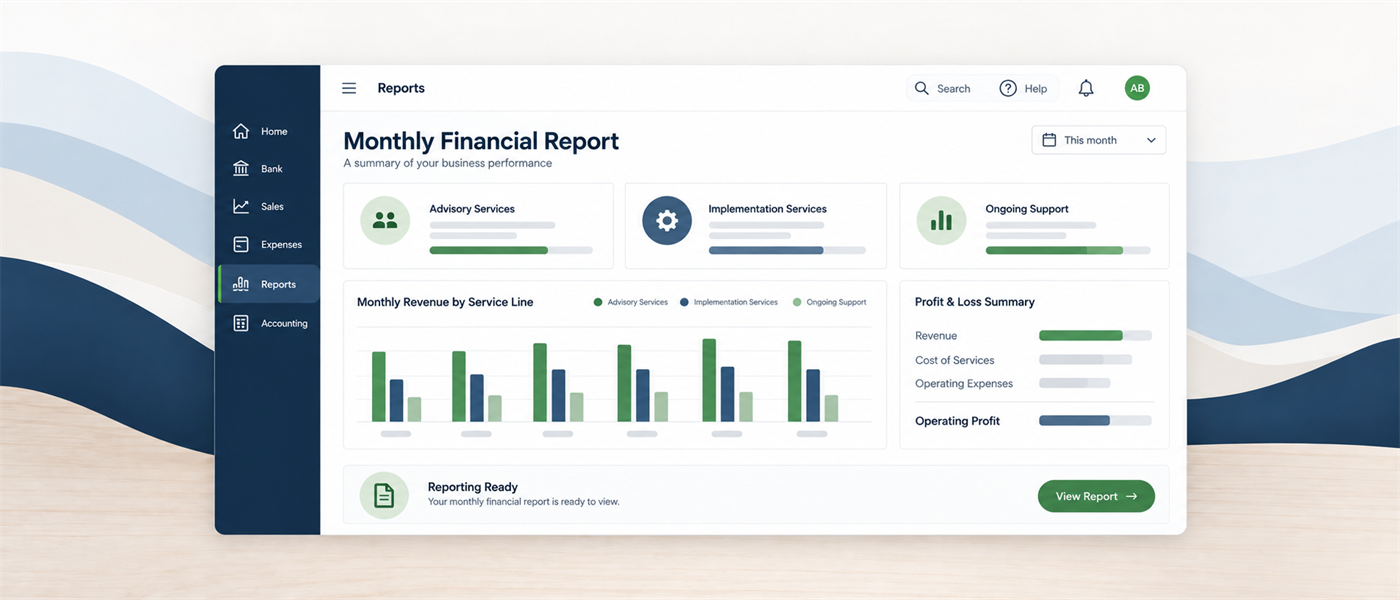
Your books are current. The accounts have been reviewed. Your profit and loss statement and balance sheet arrive each month. Yet when you look at them, you still have to ask: Which parts of the business are doing well? What changed? Is the report showing me something I can act on?
That is a different problem from unreliable books. In the first article in this series, we looked at the work behind numbers you can trust. Once that foundation is in place, the next step is making the information useful to you.
Accurate bookkeeping records what happened. Useful reporting helps you see how those events affect the business you are running.
A correct report can still leave you guessing
A standard profit and loss statement tells you what the business earned and spent over a period. A balance sheet shows what it owns and owes at a point in time. Both matter. The IRS describes good records as a basis for financial statements and for monitoring business progress.
But a report can be correct without answering the question on your mind. Suppose you own a professional-services firm with two service lines. The monthly statement may show total revenue rising and total payroll expense rising. If you cannot see which work is driving those changes, the report gives you an accurate total but little clarity about how the business is performing.
That does not mean you need a complex dashboard or a report for every possible question. It means the way information is grouped should be deliberate. A useful report gives enough detail to show what has changed without burying you in dozens of accounts and transactions.
The structure should reflect how you run the business
Many accounting systems begin with categories that work for recording transactions. Those categories do not always match the way you think about your business. You may manage by service line, location, customer type, project, or another meaningful part of operations. Your financial reports should help you see those distinctions where the records can support them.
For example, a firm might want to separate the costs directly associated with delivering a service from its general operating expenses. That can make it easier to discuss whether a line of work is contributing as expected. Another business might need a clearer view of recurring versus one-time revenue. The right grouping depends on how the business operates and on the quality of the underlying records.
The SBA notes that analyzing different segments of a business can provide useful insight. That is a good reason to ask whether your current reporting view follows the way you make decisions. It is not a reason to build a complicated set of categories that no one maintains consistently.
Changes to reporting should be made with your accounting team so the new view remains tied to the books and comparable over time. If a category means something different every month, the extra detail will create confusion instead of clarity.
Timing and explanation turn a report into a conversation
Even a well-designed report loses value if it arrives after the decisions it could have informed. A regular reporting rhythm gives you time to discuss the month while the activity is still familiar. It also creates a place to explain unusual items, changes in the business, and limits in the information.
The discussion does not have to be lengthy. It might begin with a few questions: What changed from the prior month or the same period last year? Was the change expected? Is a cost increase tied to new work, a one-time purchase, or a shift in how expenses were recorded? Is cash moving differently from reported profit because of when customers pay, bills come due, or debt payments occur?
Those questions require context from both sides. Your accounting team knows how the transactions were recorded. You know what happened in the business. When the two perspectives meet, a statement becomes more than a document in your inbox.
A report should also be honest about what it cannot show. If project costs are not tracked consistently, a service-line comparison may be premature. If customer invoices or expenses are still missing, the current month may change. It is better to know those limits than to treat every number on a polished dashboard as equally dependable.
The value of an ongoing accounting relationship
Useful reporting is rarely a one-time formatting exercise. The business changes: services evolve, staff grows, systems change, and the questions you need answered change with them. Someone needs to keep the records sound, maintain the reporting structure, and revisit whether the information still fits how you operate.
That is where a year-round CPA and accounting relationship can add value. The work may include helping you define the questions, organizing the books so reports can answer them, reviewing the monthly results, and explaining what the information does and does not support. The AICPA describes client advisory work as interpreting financial information to help clients make informed decisions.
This kind of management discussion is not an audit or an assurance opinion. It is a practical way to connect reliable bookkeeping with the decisions and concerns you bring to the table. The exact reporting and advisory work should be agreed upon for your business, rather than assumed from a standard monthly statement.
Questions to bring to your next reporting discussion
You do not need to redesign your accounting system yourself. Bring the questions you wish your reports could answer:
- Which categories on this statement help me manage the business, and which ones are too broad or too detailed?
- Can we see the parts of the business I manage separately, using information we record consistently?
- What changed this month, and do we know whether it reflects operations or a recording change?
- What information is missing or too late to use in a decision?
- What would a useful monthly conversation about these reports look like?
Your CPA or accounting partner can help decide what is practical now, what requires better tracking, and what can wait. For many businesses, a clearer monthly statement and a short review may be more valuable than another dashboard.
Put the reports to work
Accurate books give your reports a sound foundation. The next test is whether those reports arrive in time, reflect the way your business operates, and prompt a useful conversation about what changed. If they do not, the answer may be better reporting design and a stronger monthly review process.
At Woodard & Associates CPA, we work with business owners on the bookkeeping, reporting, and advisory conversations behind a clearer financial picture. If your statements are correct but still leave you guessing, we can discuss what you need to see and whether your current process can provide it.
Once your reports become useful, the next question is which information deserves your attention each month.