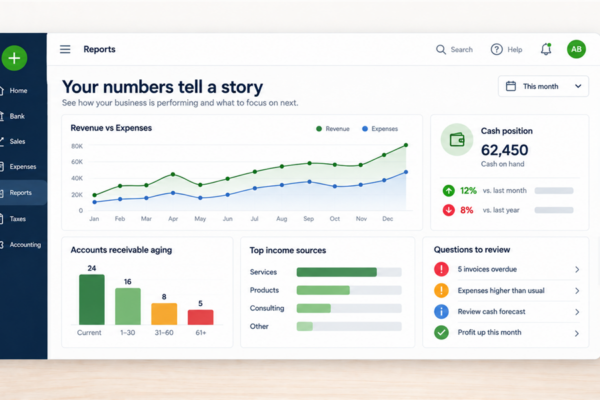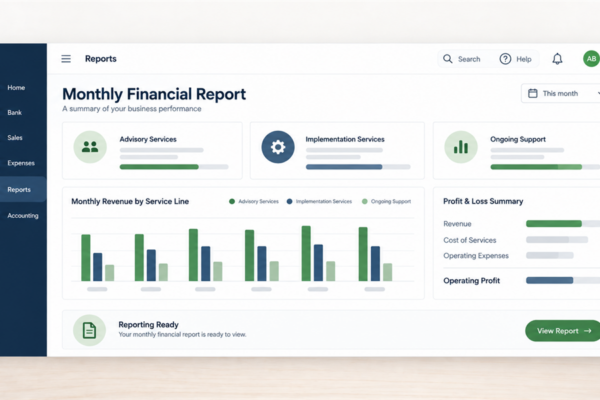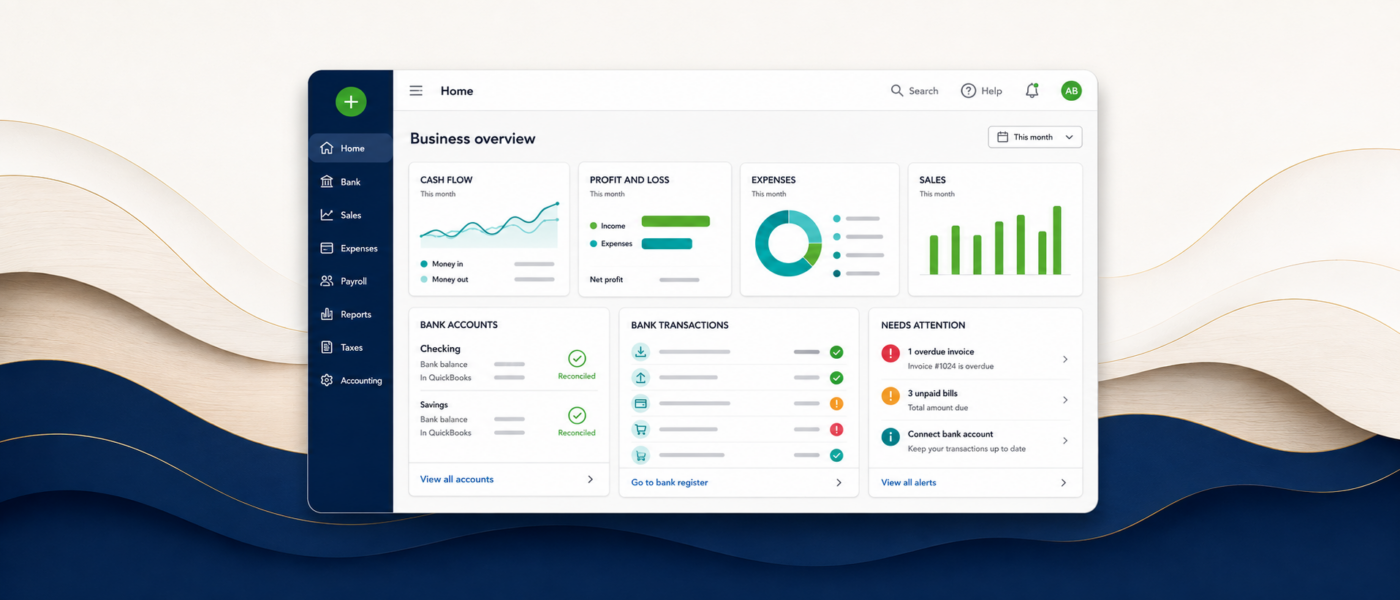
You may receive financial reports every month. You may have bookkeeping software, a bookkeeper, payroll reports, bank feeds, and a profit and loss statement that arrives on schedule.
But that does not automatically mean the numbers are reliable.
Many business owners assume their books can be trusted because someone is maintaining them. The harder question is whether the records are accurate, complete, current, consistently reviewed, and useful enough to support decisions.
That question matters before you make a major move. It matters before you hire, borrow, expand, change pricing, increase owner distributions, prepare for tax planning, or talk with a lender or buyer. If the numbers are weak, the decision built on top of them may be weak too.
This is the foundation of the Your Business Numbers series: before your reports can give you clarity, insight, or planning value, you need confidence that the numbers underneath them can be trusted.
Finished reports do not always mean reliable books
Accounting systems can produce reports even when the records behind those reports need attention.
A profit and loss statement may show revenue, expenses, and net income. A balance sheet may print without errors. A dashboard may show clean-looking charts. But if bank accounts are not reconciled, old transactions are sitting uncategorized, loans do not tie to statements, payroll liabilities are unclear, or owner transactions are mixed into operating expenses, the reports may create false confidence.
The issue is not whether every business needs complex accounting. Most closely held businesses do not need audit-level reporting for ordinary management decisions. The practical issue is whether the books have been maintained and reviewed with enough discipline that the reports reflect what actually happened.
Reliable books usually have a few things in common. Accounts are reconciled. Transactions are classified consistently. Old balances are cleaned up or explained. Major amounts can be traced back to invoices, receipts, statements, payroll records, loan documents, contracts, or other support. Someone is looking beyond data entry and asking whether the records make sense.
That last point is important. Bookkeeping is not only about getting transactions into the system. It is about creating a financial record that a business owner and advisor can use without rebuilding the month every time a question comes up.
Reconciliations are one of the first trust tests
If you want to know whether your numbers are dependable, start with reconciliations.
At a basic level, your bank accounts and credit cards should tie to the statements. Loan balances should make sense. Payroll liabilities should not carry old unexplained amounts. Accounts receivable and accounts payable should be current enough to show what customers owe you and what you owe others. If the business has inventory or fixed assets, those records should be reviewed often enough that they are not just historical leftovers.
Reconciliation is not glamorous work, but it is one of the ways errors become visible. Duplicate transactions, missing deposits, old checks, misclassified transfers, personal expenses, timing differences, and unrecorded fees can all sit quietly in the books until someone compares the accounting records to outside support.
The IRS explains that business records help prepare financial statements, identify receipts, track deductible expenses, prepare tax returns, and support items reported on those returns. That is a tax-focused source, but the principle is broader: records are useful when they can support the story the numbers are telling.
When reconciliations are skipped, rushed, or treated as an afterthought, the owner may still receive a report. But the report may not be telling the full truth.
The balance sheet often reveals whether the books are being reviewed
Many owners look first at the profit and loss statement because it feels closer to the business: revenue, expenses, and profit.
The balance sheet can be less familiar, but it is often where reliability problems show up.
Old receivable balances may suggest invoices were never collected, never written off, or not recorded correctly. Negative liability accounts may mean payroll, loans, or credit cards are not being handled properly. Stale suspense accounts may hold transactions no one knew how to classify. Owner draws, distributions, contributions, reimbursements, and personal charges may be recorded inconsistently. Fixed assets may not match what the business actually owns or owes.
None of those issues automatically means something serious is wrong. In a growing business, accounting records can get messy for practical reasons: new payment systems, rushed deposits, owner-paid expenses, staff turnover, payroll changes, financing activity, or inconsistent month-end routines.
The problem is leaving those issues unresolved.
If the balance sheet is treated as a report only the CPA looks at during tax season, the business may carry errors for months or years. By the time those issues matter, during tax planning, financing, a large business decision, or financial due diligence, cleanup becomes more stressful and less useful.
A good accounting process reviews the balance sheet regularly, not just the income statement. It asks whether balances are real, current, explainable, and supported.
Consistency matters because you are trying to see trends
Even when transactions are technically recorded, inconsistent classification can make the numbers hard to trust.
If software subscriptions are recorded in one account this month and office expense the next, your expense trends become harder to read. If subcontractor costs move between cost of goods sold and operating expenses without a clear reason, margins may look better or worse than they really are. If owner-related expenses, reimbursements, loan payments, and transfers are handled differently each month, the business may appear more volatile than it is.
This matters because most owners are not looking at reports only to satisfy a compliance requirement. You are trying to understand what is changing.
Are margins improving? Are payroll costs rising faster than revenue? Is cash tight because sales are down, receivables are slow, debt payments increased, or owner distributions changed? Are expenses truly higher, or are they just being classified differently?
The SBA notes that maintaining proper bookkeeping and understanding business finances help owners manage revenue, expenses, the balance sheet, and cash-flow planning. In practical terms, that only works when the accounting record is consistent enough to compare one period to another.
Consistency does not mean the chart of accounts can never change. As the business grows, reporting should mature. But changes should be intentional, documented, and understood by the people relying on the reports.
Timely numbers are more useful than stale numbers
Trust is not only about accuracy. It is also about timing.
Books that are accurate six months late may still help with tax preparation, but they are far less useful for running the business. By then, the owner has already made decisions about hiring, spending, pricing, borrowing, tax payments, and cash management.
Timely reporting does not have to mean a large-company close process. For many privately held businesses, it means having a regular monthly rhythm: gather missing documents, reconcile accounts, review unusual transactions, update receivables and payables, check payroll and debt activity, review the balance sheet, and produce reports while the information is still fresh.
The rhythm matters because it creates accountability. If the same issue appears every month, the team can fix the process rather than repeatedly patching the report. If a number looks unusual, someone can ask about it while the owner and staff still remember what happened.
Late books tend to turn accounting into archaeology. Current books turn accounting into management information.
A CPA/accounting relationship should add review, not just reports
One of the most valuable parts of a good year-round accounting relationship is the review layer.
That does not mean every monthly report is audited or assured. It means someone with accounting judgment is looking at whether the records make sense, whether recurring issues are being corrected, whether reporting reflects how the business actually operates, and whether the owner understands the limits of the information.
A good CPA or accounting partner can help answer practical questions:
- Are the accounts being reconciled consistently?
- Are transactions classified in a way that supports useful reporting?
- Are balance sheet accounts reviewed often enough?
- Are owner transactions, payroll, loans, reimbursements, and transfers recorded clearly?
- Are reports available soon enough to support decisions?
- Are there issues that should be corrected before tax planning, financing, growth decisions, or a possible sale?
This is where bookkeeping and advisory work connect. Bookkeeping creates the record. Review turns that record into something you can rely on. Advisory becomes more useful when the underlying numbers are strong enough to support the conversation.
Questions to ask about your numbers this month
You do not need to become your own accountant to ask better questions. Start with the places where weak numbers usually show up.
Ask whether all bank and credit card accounts are reconciled through the most recent month. Ask whether loan balances agree to statements and whether principal and interest are recorded correctly. Ask whether payroll liabilities, sales tax or other tax payable accounts, receivables, payables, deposits, fixed assets, and inventory where applicable have been reviewed.
Look at the balance sheet, not only the profit and loss statement. Are there old balances no one can explain? Negative accounts that do not make sense? Suspense or clearing accounts that keep growing? Owner entries that should be cleaned up or classified more clearly?
Review consistency. Are expenses landing in the same accounts month to month? Are direct costs separated from overhead in a way that helps you understand margins? Are unusual items identified so they do not distort normal performance?
Review timing. How soon after month-end do you receive usable reports? Are missing documents holding up the process? Is someone reviewing the reports before they get to you?
Finally, ask what the numbers are not telling you yet. Maybe the books are accurate enough for basic tax preparation but not structured well enough for management reporting. Maybe cash looks fine, but receivables are aging. Maybe profit looks strong, but debt payments, owner distributions, or tax obligations are putting pressure on cash.
Those are not just bookkeeping details. They are business issues.
Build trust before decisions depend on it
Your numbers do not need to be perfect to be useful. But they do need to be reliable enough that you understand what they can and cannot tell you.
That reliability comes from regular process: reconciliations, source support, balance sheet review, consistent classification, timely reporting, and accounting judgment. When those pieces are missing, the reports may still arrive, but the owner is left guessing whether to believe them.
At Woodard & Associates CPA, we help business owners strengthen the bookkeeping and reporting foundation behind their decisions. If you are not sure whether your current reports are giving you numbers you can trust, a review of your accounting process can help identify what is solid, what needs cleanup, and what should be improved before bigger decisions depend on the reports.
Once the numbers can be trusted, the next question is whether they are actually useful for running the business.
This article is for general educational purposes only and is not individualized accounting, tax, legal, investment, valuation, audit, assurance, or financial advice. Your bookkeeping, reporting, tax, financing, and business advisory needs depend on your specific facts and should be reviewed with the appropriate advisors.