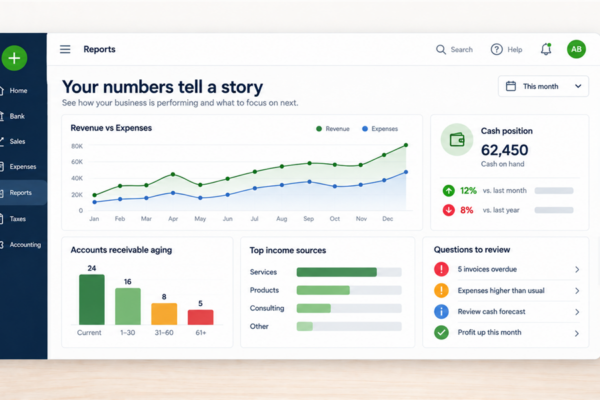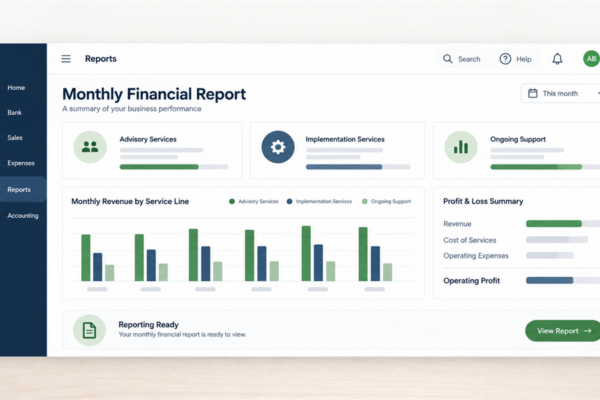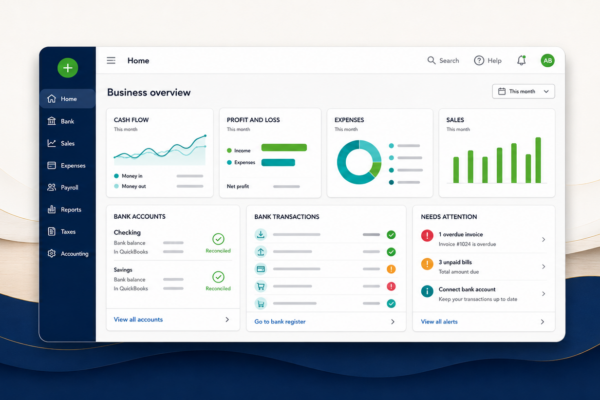
Revenue growth is good news. More work is coming in, the business is busier, and the top line is moving in the right direction.
But many owners reach a frustrating point: revenue is up, yet the business does not feel more profitable, cash still feels tight, and the next major decision still feels risky.
That disconnect is not unusual, and it does not automatically mean something is wrong. It means revenue is only the first part of the story. The more useful question is what it took to earn that additional revenue, what is left after the related costs, and whether cash is moving through the business in a way that supports growth.
That conversation depends on the foundation established earlier in this series. Reliable bookkeeping and regular review make the financial information credible. Useful, timely reporting makes it possible to see changes. From there, the work is to understand why those changes are happening.
More revenue does not automatically create more financial strength
Revenue tells you how much the business sold or earned. It does not tell you what the business kept after the cost of delivering that work and supporting the operation.
For a professional-services business, additional revenue may require more employee time, contractor support, recruiting, software, office capacity, or management attention. A business may also grow by taking on work with a different cost profile. The sales number can rise while the additional work produces less contribution than expected.
Pricing can be part of that story, but it is not always the answer. The issue might be a new service line that takes more time to deliver, routine discounts, or costs not tracked in a way that makes the relationship visible. It may also reflect a temporary investment ahead of growth.
The point is not to judge a single month by a rule of thumb. It is to connect the revenue change to the work, costs, and business decisions behind it.
Look for the cost pressure that grew with the work
When revenue rises but profit does not seem to follow, start by asking which costs moved with the revenue and which rose independently.
Payroll and contractor expenses are often an important part of the conversation, especially in service businesses. A new hire may be necessary to serve demand, but the timing matters. You may be carrying the cost before that person's work is fully billable or collected. The same is true when the business adds capacity, enters a new market, or improves systems before the related revenue is fully established.
This is where reporting needs enough detail to be useful without becoming a spreadsheet exercise. A clear comparison can show whether the pressure is concentrated in a service line, a customer group, direct labor, overhead, or a one-time item. If the records do not separate those areas consistently, the first step may be improving the information before drawing a conclusion.
Growth can make cash feel tighter before it feels better
A profitable growing business can still feel short of cash.
You may need to pay people, vendors, or deposits before a customer pays. A larger receivables balance may be normal if the business is billing more, but it also may show that collection timing is stretching as volume grows. Equipment purchases, debt principal payments, tax payments, owner distributions, and payments for earlier obligations can also use cash without appearing as current operating expenses in the same way on a profit and loss statement.
That is why a healthy bank balance one month, or a profit number on its own, does not settle the question. The useful review connects the profit and loss statement, balance sheet, receivables, upcoming obligations, and bank activity. The IRS notes that business records help owners prepare financial statements and monitor business progress. The records are most valuable when they help you see how the operating activity and cash movement relate to each other.
Service mix and timing can change the result without changing the headline
Two periods can show similar revenue and have very different underlying stories.
One period may include work that was priced well, delivered efficiently, and collected quickly. Another may contain a large project with more staff time, delayed billing, outside support, or a long collection cycle. A new service can be strategically worthwhile even if its early economics look different from the established part of the business. A high-revenue client can also create concentration or collection risk that is not visible in the sales total.
Timing matters as well. A large annual expense, a catch-up payroll adjustment, or revenue recorded in a different period can distort a simple comparison. Before treating a change as a trend, ask whether it is recurring, expected, and recorded consistently.
This is not an argument for explaining away every disappointing result. It is a reason to separate a temporary event from a pattern that deserves a business response.
Turn the concern into a focused review
When the business feels weaker despite higher revenue, a useful review can begin with a few practical questions:
- Compared with the period that matters most, what changed in revenue, and what changed in the work required to produce it?
- Which costs rose with revenue, and which costs increased because the business added capacity or complexity?
- Is the change concentrated in a particular service, client group, project type, or operating area?
- Are receivables growing because billing volume is higher, because payment timing changed, or because follow-up needs attention?
- What used cash during the period besides routine operating expenses?
- Which changes are one-time or intentional investments, and which look likely to continue?
- What information is missing before we decide whether to adjust pricing, staffing, spending, collections, or something else?
You do not need to answer every question alone or make a major change from a single report. The goal is to identify the drivers that deserve attention.
Understand the story before choosing the response
The value of a good accounting relationship is not simply a report that shows revenue and expenses. It is the recurring process of connecting those numbers to the way your business operates, asking the right follow-up questions, and distinguishing an expected investment from a developing problem.
The AICPA describes client advisory work as interpreting financial information to help clients make informed decisions. In practice, the right discussion should be specific to your business and honest about what the records can support.
At Woodard & Associates CPA, we help business owners use reliable bookkeeping and reporting to understand the drivers behind their financial results. If revenue is growing but the business does not feel stronger, we can discuss whether your financial information is showing the questions that matter before you make the next move.
This article is educational and is not individualized accounting, tax, legal, investment, financing, or valuation advice. It does not provide an audit, review, or assurance opinion.
Understanding the story behind performance is valuable. The next step is using that insight to evaluate whether the business can afford its next big decision.